
Anonymous
-
-
4 min read
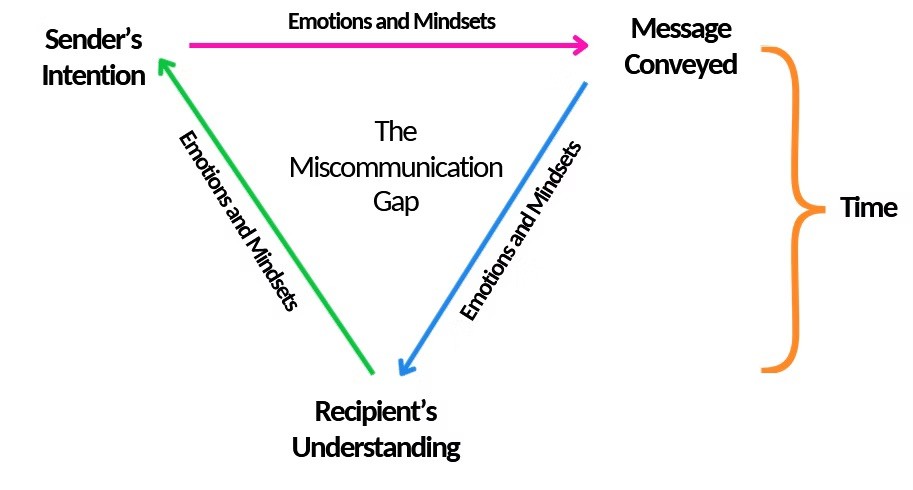
Communication is actually a three-way interaction. It is usually intended for a specific purpose and recipient, conveyed through a message at a specific time. Miscommunication arises when there is a disconnect among these elements. This means it occurs when:
The sender’s intention doesn’t align with the message.
The recipient’s understanding differs from the message.
The recipient’s understanding and the sender’s intention don’t match.
To make matters even more complicated, all of this is heavily influenced by timing.
The Sender's Intention
One Monday morning at work, I sent a slack message to my team asking them to "circle back on the report." What I meant was, "Let's revisit the report together in a meeting to refine it." But I’d written it so briefly that it came across as, "Fix the report yourselves and update me." Later that day, I found everyone stressing, redoing entire sections, and even questioning whether they’d be able to meet the deadline. In hindsight, my emotions—feeling rushed and overwhelmed at the start of the week—had influenced the brevity of my message, causing it to lack the necessary clarity. My intention and the actual message had diverged, creating a miscommunication gap that threw the team into unnecessary turmoil.
When emotions like stress or frustration dominate, they distort communication, making it harder for the recipient to decipher the true intent behind the words.
Emotions and mindsets often cloud the clarity of the message being delivered, altering not just the content but also the tone and speed of delivery. For instance, imagine the rushed pace and clipped tone we sometimes adopt when stressed—our words might come out sharp or hurried, inadvertently signaling frustration or impatience. This can color the message in unintended ways, leaving the recipient grappling with its emotional undercurrents as much as its content.
Mindsets, too, shape how we communicate. Think about how we approach conversations with children—we repeat ourselves, assuming they don’t understand, rather than considering if we’re communicating in a way they can understand. Similarly, in workplaces, preconceived notions about a colleague’s attentiveness or capability might lead us to oversimplify or over-explain, complicating the communication even further.
The Recipient's Understanding
On the recipient’s side, understanding a message is rarely straightforward. Emotions, assumptions, and personal mindsets play a significant role in how we interpret what we hear. I'm reminded of a time when I told my mum, "I'll be handling dinner tonight." In my mind, I was going to make a simple pasta dinner with some few greens. In her mind, however, it was going to be a full-blown dinner banquet. I walked into her inviting my aunt to this dinner event and had to clarify my message. She was unconvinced and long-story-short, I ended up making the banquet of a dinner she desired.
Recipients often fill in the blanks of unclear communication with their own interpretations, which can lead to further misunderstandings.
At work, this tendency is compounded by a fear of asking questions or providing feedback, especially in environments where questioning authority is discouraged. This lack of feedback widens the miscommunication gap and fosters inefficiency between what was understood and what was said.
Timing
Timing is a cruel master, as I discovered during one particularly stressful day. I’d just walked out of a difficult meeting when my manager called to ask about a project update. Instead of my usual calm and detailed response, I snapped: "I’ll get to it when I get to it!" Of course, I didn’t mean to sound dismissive; I was just overwhelmed in that moment. Later, I had to apologize and explain the context, but the damage was done.
Poor timing can make even the clearest of messages feel abrupt or irrelevant, while well-timed communication aligns with the context and emotional state of both the sender and the recipient.
Timing can either enhance understanding or exacerbate miscommunication, depending on how it interacts with the emotions and mindsets of everyone involved. While getting the timing of a communication event can sometimes be problematic, assessing the immediate emotions we receive from those we are communicating to, and applying empathy can quickly help us to navigate the challenges of timing.
Conclusion
Obviously, whenever we communicate, there is an inherent gap created by our lack of awareness of what is happening within ourselves and in the other person. Miscommunication is not a failure of one party but a natural byproduct of human interaction. Blame, therefore, should be the last resort. Instead, recognizing the complexity of emotions, timing, and context can help us navigate these gaps with greater empathy and patience.
Popular Blogs


Explore more educational blog pieces.
Read through our research-driven and informational blogs to learn more about how you can thrive in your career.